Betaine and homocysteine are closely linked through the transmethylation cycle: betaine acts as a methyl donor and directly converts the potentially harmful homocysteine into the essential amino acid methionine. This process is crucial to the metabolism of production animals and has direct implications for growth, liver function, and overall animal health. In the sections below, we answer the most frequently asked questions about this relationship.
How does betaine convert homocysteine into methionine?
Betaine converts homocysteine into methionine through an enzymatic reaction in which the enzyme BHMT (betaine-homocysteine methyltransferase) transfers a methyl group from betaine to homocysteine. The result is methionine and dimethylglycine (DMG). This process is part of what is known as one-carbon metabolism, also referred to as the transmethylation cycle.
Betaine carries three methyl groups (CH₃), making it one of the most efficient methyl donors in animal metabolism. The cycle proceeds as follows:
- Choline is oxidized in the liver to form betaine.
- Betaine transfers a methyl group to homocysteine via BHMT.
- Homocysteine is converted into methionine.
- Methionine is then converted into S-adenosylmethionine (SAM), the universal methyl donor for hundreds of biological processes.
SAM plays a key role in the synthesis of creatine, adrenaline, carnitine, and phosphatidylcholine. By actively recycling homocysteine, betaine keeps the methyl cycle running and prevents the accumulation of this intermediate. Learn more about betaine as a methyl donor on our product page.
What are the consequences of elevated homocysteine levels in animals?
Elevated homocysteine levels in animals occur when the methyl cycle is not functioning properly — for example, due to a deficiency of methyl donors such as betaine or folic acid. The accumulation of homocysteine places a burden on the liver, disrupts DNA methylation, and increases the risk of inflammation and metabolic problems.
Specifically, the following consequences may arise from a methyl donor deficiency:
- Reduced DNA methylation: this negatively affects gene expression and cell regulation.
- Increased liver inflammation: the liver becomes overloaded when methyl donation is insufficient.
- Impaired hepatic oxidation: fat metabolism is disrupted, leading to fat accumulation in the liver.
- Poorer technical performance: growth, feed conversion, and reproduction can all decline.
In production animals, a disrupted methyl cycle therefore translates not only into health problems but also into measurable economic losses. Regulating homocysteine through adequate betaine supplementation is therefore a practical and preventive measure.
When do animals need additional betaine to regulate homocysteine?
Animals need additional betaine when the demand for methyl groups increases or when the supply of methyl donors falls short. This is the case during heat stress, rapid growth, peak reproductive load, low-protein diets, and periods of illness or recovery.
Specific situations in which betaine supplementation is particularly relevant:
- Heat stress: high temperatures increase osmotic stress in cells while simultaneously raising the demand for methyl donors.
- Fast-growing animals: broilers and finishing pigs in the growth phase have an increased need for methionine to support muscle development.
- Pregnant and lactating sows: in late gestation and early lactation, the demand for methyl groups rises to support placental growth and milk production.
- Marginal choline levels: when dietary choline levels are low, betaine is the most efficient supplement to fulfill the methyl donor function.
- Low-energy or low-protein diets: in optimized, cost-conscious rations, the availability of methionine and choline may be limited.
In all of these situations, betaine helps keep homocysteine levels under control by actively supporting the remethylation reaction.
Does the betaine-homocysteine relationship differ between poultry, pigs, and ruminants?
Yes, the betaine-homocysteine relationship varies by species, primarily due to differences in metabolism, diet, and the degree to which the BHMT enzyme is active. In monogastric animals such as poultry and pigs, direct remethylation via betaine is particularly efficient. In ruminants, rumen fermentation plays a modulating role.
Poultry and pigs
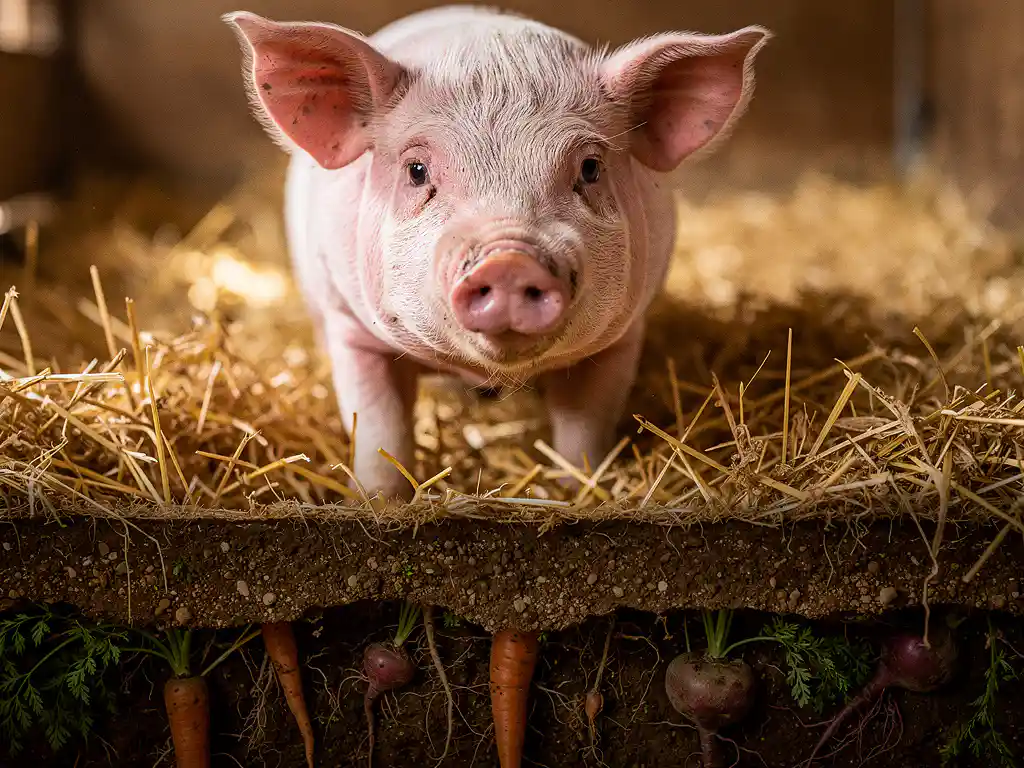
In poultry and pigs, the BHMT enzyme is strongly expressed in the liver and kidneys. This makes betaine a particularly effective methyl donor in these species. Broilers and finishing pigs benefit directly from betaine supplementation through improved methionine recycling, which contributes to better growth, reduced fat deposition, and higher carcass quality. In sows, the relationship is especially relevant during the reproductive cycle, when methyl requirements fluctuate considerably.
Ruminants
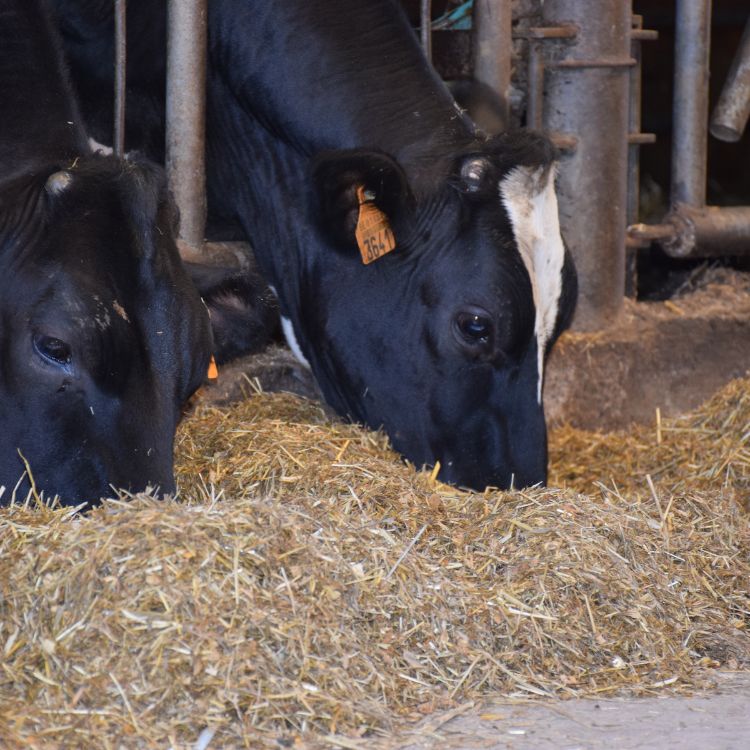
In ruminants such as cattle, a portion of nutrients is broken down in the rumen before reaching the small intestine. Betaine supplied through the diet may be partially fermented by rumen microbes. Nevertheless, the metabolic activity of betaine remains relevant in the intestinal wall and liver, particularly in dairy cows during the transition period and during heat stress. Products such as Acibet TMR are specifically developed for use in TMR rations for ruminants.
How does betaine supplementation affect dietary methionine requirements?
Betaine supplementation can reduce dietary methionine requirements because betaine converts homocysteine into methionine, allowing methionine to be recycled internally. This sparing mechanism makes it possible to partially reduce dietary methionine without compromising performance.
Betaine also has an indirect effect through carnitine synthesis. By fulfilling the methyl donor function, betaine stimulates the production of carnitine from lysine and methionine. Carnitine transports long-chain fatty acids into the mitochondria for beta-oxidation, resulting in increased fat oxidation, reduced fat deposition, and improved energy availability for protein accretion.
In practice, this means that betaine, in combination with an optimized diet, improves the efficiency of expensive amino acids such as methionine. This is particularly relevant during periods of high production or stress, when methionine requirements are at their peak. Jodobet is our core product for this application, available in both liquid and crystalline form.
What does scientific research say about betaine and homocysteine in production animals?
Scientific research consistently confirms that betaine supplementation lowers homocysteine levels and improves methionine status in production animals. Studies in broilers, pigs, and ruminants demonstrate improved technical performance, better carcass composition, and a reduced metabolic burden on the liver.
Research conducted at Schothorst Feed Research (the Netherlands) confirms that natural betaine is more effective than synthetic alternatives such as betaine-HCl in restoring nutrient digestibility in coccidiosis challenge models. Trials at ILVO Ghent (2018) with ROSS 308 broilers showed that equimolar replacement of choline chloride with natural betaine led to increased feed intake, improved body weight gain, and a better feed conversion ratio (FCR).
Additionally, research published in the Journal of Thermal Biology (2025) demonstrates that betaine improves breast muscle weight under heat stress through enhanced cellular hydration and antioxidant protection. This underscores that the betaine-homocysteine relationship does not stand alone, but forms part of a broader metabolic network that protects animals under demanding conditions.
Research also highlights the importance of the delivery method: drinking water additives offer a reliable alternative to feed additives, as water intake remains more stable than feed intake during periods of stress or illness.
How Jodoco supports the betaine-homocysteine balance in animals
At Jodoco, we develop scientifically substantiated betaine products that actively support the transmethylation cycle and effectively convert homocysteine into usable methionine. Our approach is built on years of collaboration with universities and research institutes, with the goal of delivering concrete, measurable results at the farm level.
What we offer for an optimal betaine-homocysteine balance:
- Jodobet L35 and D96: natural betaine derived from non-GMO sugar beets, available in liquid and crystalline form for use in feed and drinking water.
- Species-specific customization: tailored dosages and formulations for poultry, pigs, and ruminants, aligned with production stage and stress level.
- Technical support: our specialists collaborate with you on ration optimization, methionine sparing, and heat stress management.
- Scientific foundation: all products are validated through independent trials and in-house laboratory research.
Want to know how betaine can improve your farm’s results? Contact us and we will be happy to work with you to find the best approach for your situation.