Yes, betaine can meaningfully support the weaning transition in piglets. As a natural osmolyte and methyl donor, betaine protects intestinal cells from stress, strengthens the gut barrier, and supports critical metabolic processes at the moment when piglets are most vulnerable. For pig farmers and feed manufacturers looking for scientifically substantiated, natural solutions, betaine in animal feed is a relevant choice. In this article, we answer the most frequently asked questions about betaine and the weaning transition in piglets.
What makes the weaning transition so stressful for piglets?
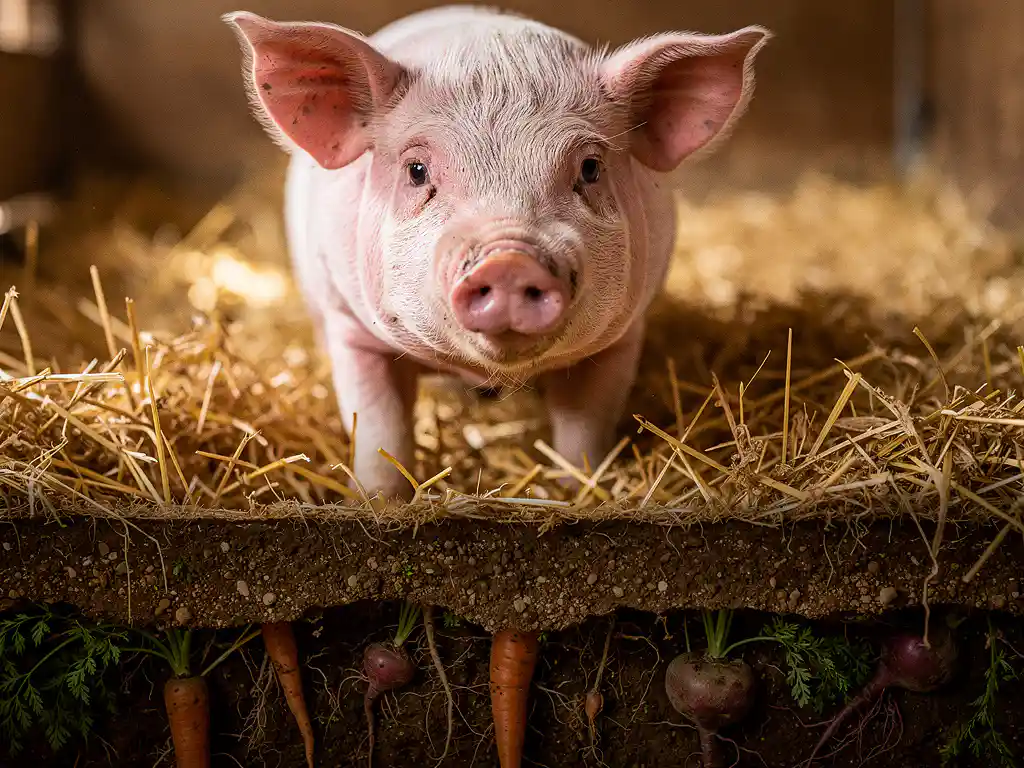
The weaning transition is the most critical phase in a piglet’s life. At the moment of weaning, piglets are simultaneously exposed to multiple stressors: separation from the sow, the switch from liquid sow’s milk to solid feed, a new social environment, and an immature digestive system that is not yet ready for the transition. This combination of stressors almost always leads to a temporary decline in feed intake and growth.
Physiologically, the impact is significant. The small intestine of a weaned piglet undergoes structural changes: villus height decreases and crypt depth increases. This means a reduced absorption surface and a diminished capacity to absorb nutrients. At the same time, the microbiome temporarily becomes unbalanced, increasing the risk of dysbiosis and intestinal inflammation.
The consequences are practically measurable:
- Reduced feed intake in the first days after weaning
- Lower daily gain and poorer feed conversion
- Increased susceptibility to pathogens such as E. coli
- Increased risk of post-weaning diarrhea
- Greater variation in weight within the litter
It is precisely this combination of osmotic stress, immune pressure, and metabolic change that makes betaine a relevant support for piglets.
How does betaine protect intestinal cells in piglets?
Betaine protects intestinal cells in piglets by acting as a compatible osmolyte. When cells are exposed to osmotic stress — such as during dehydration or changes in salt concentration — betaine moves into the cytosol and attracts water molecules. This stabilizes cellular tonicity and cell volume without disrupting normal cell functions.
In practical terms, this means that the epithelial cells of weaned piglets are better able to resist shrinkage and stress. Betaine also strengthens the so-called tight junction proteins, such as occludin and claudin-1. These proteins form the “glue” between intestinal cells and determine how well the gut barrier functions. A strong barrier prevents harmful substances and pathogens from leaking through the intestinal wall, reducing inflammation and infection.
In addition, betaine has antioxidant and anti-inflammatory properties. When the gut of a weaned piglet is under pressure, betaine helps limit oxidative damage and modulate the inflammatory response. This contributes to a faster recovery of gut structure after weaning.
Another important mechanism is the improvement of gut morphology itself. Scientific research shows that betaine increases villus height and reduces crypt depth, resulting in a larger absorption surface. For piglets that have just been weaned and need every nutrient to grow, this is a directly measurable benefit.
What is the difference between betaine and other osmolytes in animal feed?
Betaine distinguishes itself from other osmolytes in animal feed in that it not only provides osmotic protection, but simultaneously contributes actively to methyl donor metabolism. Other commonly used osmolytes, such as taurine or glycine, do protect cells against osmotic stress, but play no role in the one-carbon metabolism cycle. Betaine does both at the same time.
A comparison often made in practice is between betaine and choline chloride. Choline fulfills four functions in the animal body: neurotransmission, membrane synthesis, lipid transport, and methyl donation. Betaine covers only that fourth function, but does so with exceptional efficiency. Betaine is approximately twice as effective as choline as a methyl donor. This means that when there is a marginal need for methyl donors, betaine is the most targeted and efficient choice.
It is important to note that betaine cannot be converted into choline. It therefore does not replace all the functions of choline, but specifically supplements the methyl donor component. For piglets in the weaning phase, where metabolic pressure is high and the liver is not yet fully mature, this targeted support is particularly valuable.
Compared to synthetic alternatives such as betaine HCl, natural betaine also has a lower carbon footprint and a proven superior performance under challenging conditions, such as in a coccidiosis challenge model.
Which physiological processes does betaine support during weaning?
During weaning, betaine supports multiple physiological processes simultaneously. The three most important are osmoregulation, methyl donation, and the synthesis of carnitine via protein and fat metabolism. Together, these processes result in a more stable metabolism, better growth, and a healthier gut in weaned piglets.
The role as a methyl donor is particularly relevant during the weaning phase. Through the transmethylation cycle, betaine supplies methyl groups needed for DNA methylation, liver function, and the production of essential compounds. A deficiency of methyl donors leads to reduced DNA methylation, increased liver inflammation, and impaired hepatic oxidation — precisely the processes that come under pressure in weaned piglets switching nutritional sources.
Through its methyl donor function, betaine also stimulates carnitine synthesis from lysine and methionine. Carnitine transports long-chain fatty acids into the mitochondria for beta-oxidation. The result: increased fat oxidation, reduced fat deposition, and better availability of energy for protein accretion. For piglets that need to grow quickly after weaning, this energy shift is directly beneficial.
Finally, betaine supports microbiome balance. By stabilizing the intestinal environment and strengthening barrier function, betaine promotes a state of eubiosis: a stable, diverse microbiome dominated by beneficial bacteria. This reduces the risk of dysbiosis and the associated intestinal problems after weaning.
When and how is betaine best applied in piglet feeds?
Betaine is most effectively applied around and directly after the moment of weaning, when osmotic and metabolic pressure on piglets is greatest. The optimal approach is preventive: begin supplementation at weaning and maintain it throughout the first weeks of the post-weaning phase, giving the gut the opportunity to recover and develop.
For practical application, there are two main routes:
- Via feed: Betaine in powder or liquid form can be added to piglet feed. Natural betaine is heat-stable up to 200°C and can be incorporated at any stage of the mixing, conditioning, and pelleting process, making application in compound feed manufacturing straightforward.
- Via drinking water: Water-based administration offers the advantage that uptake is more reliable than through feed, especially in the first days after weaning when piglets eat less but continue to drink. The dosage is fully flexible and controllable by the farmer.
In terms of dosage, the methyl donor function is already active at relatively low levels. Higher doses are beneficial when the osmoregulatory and performance-enhancing effects are also desired. A betaine calculator can help determine the optimal dosage based on the specific ration and target objective.
For compound feed manufacturers and nutritionists, it is also relevant to know that betaine does not destroy vitamins in premixes, making it a safe choice in complex feed formulations.
What results have been scientifically demonstrated for betaine in weaned piglets?
Scientific research confirms that betaine produces measurable improvements in growth, feed conversion, and gut health in weaned piglets and pigs. The effects are most pronounced under conditions of osmotic stress, heat, or a challenging microbial environment — precisely the conditions that occur during the weaning transition.
Multiple trials in broilers, which show physiologically comparable gut stress responses, demonstrate that betaine increases villus height, reduces crypt depth, and improves nutrient utilization. Trials conducted at ILVO Ghent show that betaine performs equally well or better than choline chloride at comparable doses, with a clear dose-dependent effect at higher supplementation levels.
For pigs specifically, research shows that betaine strengthens the gut barrier through tight junction proteins, supports microbiome balance, and improves metabolic efficiency. In practice, this translates to:
- Better daily gain in the first weeks after weaning
- Improved feed conversion ratio (FCR)
- Reduced susceptibility to post-weaning diarrhea
- A more stable microbiome with less dysbiosis
- Better carcass quality through increased protein accretion and reduced fat deposition
The scientific foundation for betaine in animal feed and drinking water products has been built through in-house laboratory research and collaboration with national and international knowledge institutions, including ILVO Ghent and Schothorst Feed Research. This combination of field practice and academic validation makes betaine a reliable choice for professional pig farmers and feed manufacturers.
How Jodobet supports the weaning transition in piglets
We developed Jodobet as our core product based on natural betaine derived from sugar beets, and it is specifically designed to address the challenges of the weaning transition in piglets in a targeted way. Jodobet combines the power of betaine as an osmolyte and methyl donor in one proven formula that is easy to integrate into both feed and drinking water.
In concrete terms, Jodobet offers the following benefits for weaned piglets:
- Protection of intestinal cells against osmotic stress through the osmoregulatory action of betaine
- Strengthening of the gut barrier through support of tight junction proteins
- Metabolic support via the methyl donor function and stimulation of carnitine synthesis
- Improved growth and FCR through a larger absorption surface and better nutrient utilization
- Easy application in feed or drinking water, heat-stable and safe in premixes
Whether you are a compound feed manufacturer, distributor, or professional pig farmer, we are happy to help you determine the right formulation and dosage for your specific situation. Contact us and discover what Jodobet can do for your piglets.