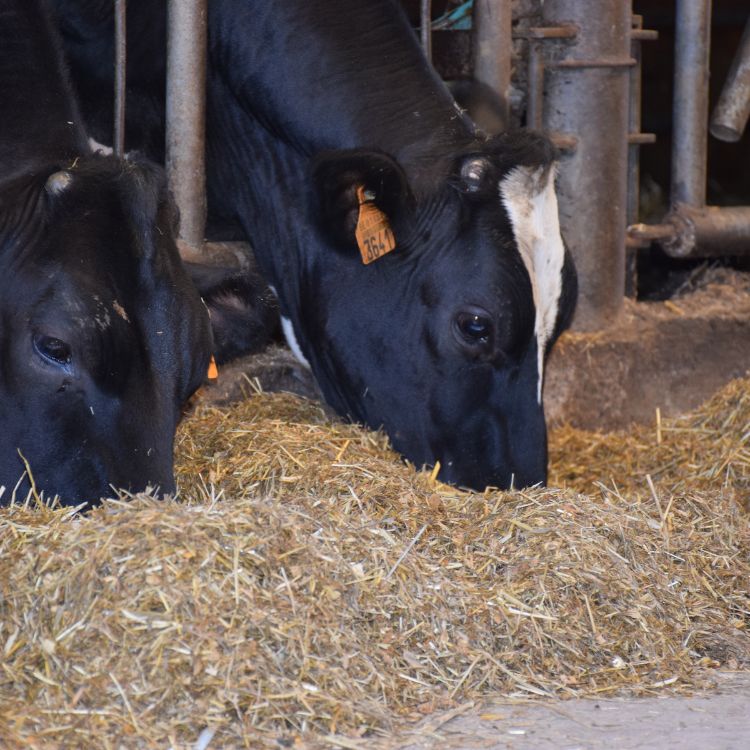
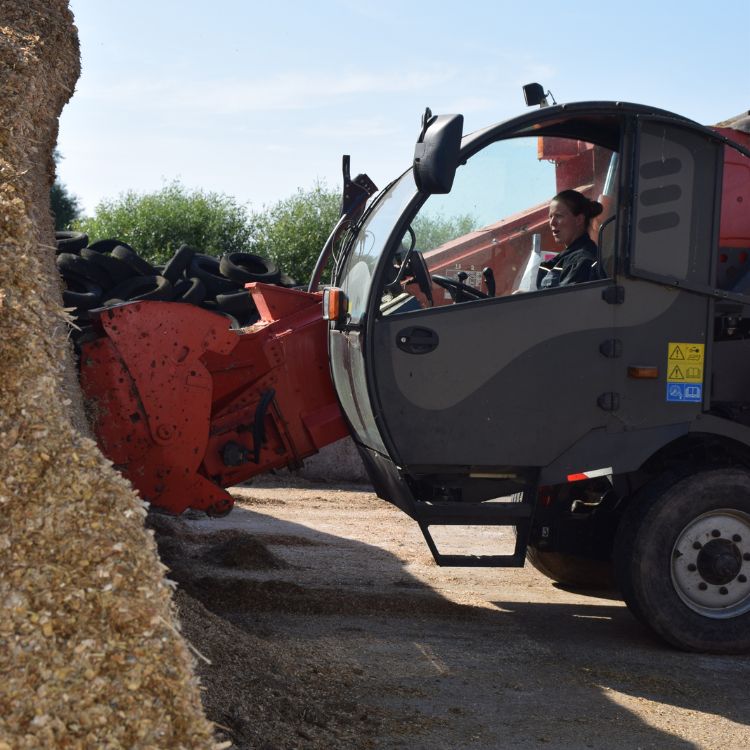
Lower milk fat production is often attributed to the feed ration. However, the cause can often be traced back months earlier: to the silage-making process.
The quality of silage determines much more than just its nutritional value. It affects palatability, feed intake, rumen function, and ultimately the cow’s performance. Well-harvested silage allows you to formulate a stable ration. Poor-quality silage requires adjustments throughout the season.
Making the right choices during silage production lays the foundation for a healthier herd and better financial results.
Why silage quality has such a big impact on milk fat
Milk fat consists largely of volatile fatty acids that are formed in the rumen during the digestion of fiber-rich forage.
When the rumen is functioning stably, rumen microbes produce sufficient amounts of acetic acid and butyric acid. These fatty acids are important building blocks for milk fat.
If rumen function is disrupted by poorly preserved silage, insufficiently effective rumen structure, or an unbalanced diet, milk fat production often decreases.
That is why managing milk fat content does not start in the concentrate bin, but with the production of high-quality forage.
Four Factors That Make a Difference During Silage Production
1. Harvest at the correct dry matter content
Ensilage that is too wet increases the risk of juice loss and unwanted fermentation. Ensilage that is too dry makes compaction more difficult, causing oxygen to remain trapped and leading to faster heating.
For most grass silage, a dry matter content of about 35 to 45% is a good starting point, depending on the conditions and the ensiling system.
A simple dry-matter measurement before ensiling prevents many problems later in the season.
2. Maintain a sufficiently effective structure
It’s not just about nutritional value.
The structure of the roughage also determines how long cows ruminate and how much saliva is produced. That saliva helps keep the rumen pH stable.
A crop that has been chopped too short can increase feed intake, but reduces its effective structure. A crop that is too long, on the other hand, is difficult to compact.
The correct cutting length therefore always requires a balance between structure and preservation.
3. Ensure rapid and controlled fermentation
Proper preservation begins as soon as the grass is placed in the silage pit.
By compacting the mixture quickly and immediately covering it with an airtight seal, lactic acid bacteria are able to lower the pH rapidly. This limits the growth of yeasts, molds, and unwanted bacteria.
A well-preserved silage pit retains more nutrients and remains more stable during silage removal.
4. Prevent heating during silage removal
Even a perfectly ensiled silage can lose quality if oxygen re-enters during feeding.
Fermentation not only consumes energy and dry matter, but also reduces the palatability of the ration.
Therefore, use a clean cut, ensure an adequate feed rate, and prevent loose feed from accumulating on the silage.
Common Mistakes Made During Silage Production
In practice, consultants often encounter the same challenges.
Therefore, make sure to avoid these mistakes:
- mowing in adverse weather conditions;
- insufficient compaction;
- a layer that is too thick per pass;
- covering it too late;
- damaged silage wrap;
- Insufficient attention to heating after the silage pit is opened.
Minor mistakes made during silage production can affect feed quality for months.
From high-quality silage to a balanced diet
Even the best silage will only produce results if it fits into the overall diet.
Therefore, please pay attention to:
- sufficiently effective NDF;
- a good balance between starch and digestible fiber;
- regular analysis of the roughage;
- monitoring of rumination activity and manure characteristics;
- Gradual transitions in feeding.
- Milk fat is ultimately the result of the interaction between forage, concentrate, and rumen health.
The Role of Jodosil NC
Successful silage production requires more than just good silage management. Jodosil NC supports the fermentation process and helps maintain feed quality during storage. As a result, it contributes to more stable silage, better nutrient utilization, and a diet that optimally supports the rumen. The product does not replace proper silage management, but it does enhance the results when the foundation is in place.
Practical Checklist for the Silage Season
Use this checklist before the first vehicle hits the road:
- Check the dry matter content.
- Adjust the cutting length to suit the crop.
- Apply in thin layers for optimal compaction.
- Cover the pit immediately to make it airtight.
- Check the film for damage.
- Analyze the silage before incorporating it into the ration.
- Evaluate silage quality throughout the season.
- Conclusion
Good hay doesn’t happen by chance. It is the result of careful harvesting, precise ensiling, and attention to preservation.
Those who invest in silage quality often reap the benefits for months on end. Not only in the form of improved feed intake and more stable rumen function, but also through more consistent milk production and a higher milk fat content.
Would you like to further optimize your silage strategy or learn how Jodosil NC can help improve preservation? The specialists at Jodoco are happy to work with you and provide advice based on your forage, feed ration, and business objectives.