Heat stress in animals occurs when body temperature rises due to high ambient temperatures and the animal’s ability to dissipate heat becomes insufficient. This disrupts the animal’s internal balance and has direct consequences for health, behavior, and productivity. Livestock are particularly vulnerable because they are kept at high densities and have limited opportunities to seek out cooling on their own. In this article, we answer the most frequently asked questions about heat stress in farm animals, from recognition to prevention.
Which animals are most susceptible to heat stress?
Pigs, dairy cows, and poultry are the farm animals most susceptible to heat stress. Pigs lack sweat glands and can barely release heat through their skin. Dairy cows generate a great deal of body heat themselves due to their intensive metabolism. Poultry have a high body temperature and limited options for cooling down. The higher an animal’s production level, the greater the risk of heat stress.
In pigs, susceptibility is strongly dependent on the stage of production. Sows in late gestation and early lactation are especially vulnerable because their metabolism is running at full capacity at that point. Finishing pigs are also quickly affected by higher temperatures, resulting in a clear decline in feed intake and growth.
Among poultry, broilers and turkeys with high growth rates are at particularly high risk. Their rapid muscle development is accompanied by high heat production. Laying hens, on the other hand, are vulnerable due to the combination of continuous egg production and the additional burden a warm climate places on calcium and fluid metabolism.
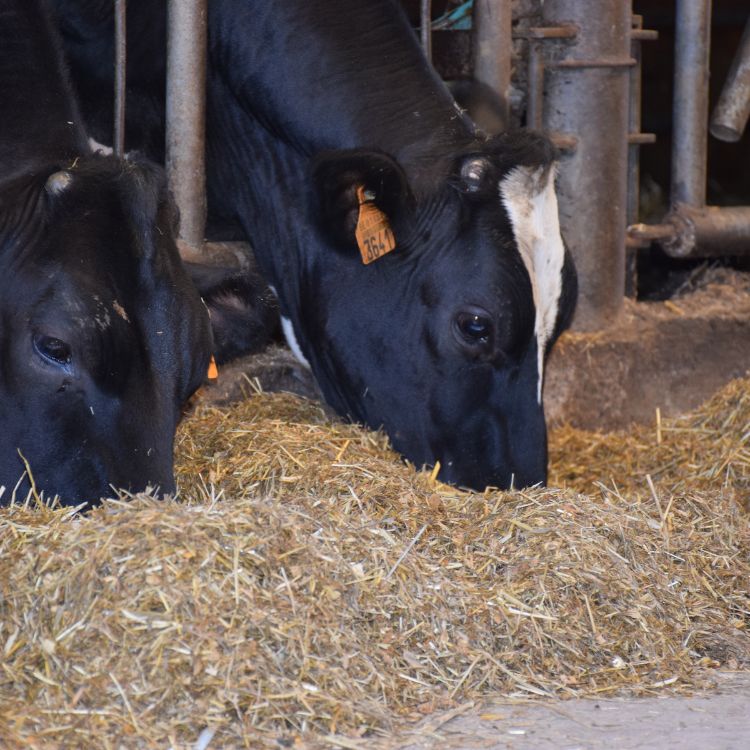
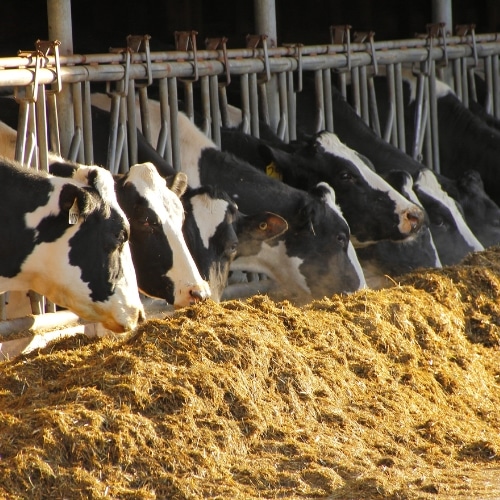
In ruminants, and especially in high-producing dairy cows, heat stress in livestock is a chronic problem in warm climates. The combination of rumen fermentation, milk production, and high dry matter intake means these animals continuously generate heat, even when outdoor temperatures are not extreme.
What are the symptoms of heat stress in farm animals?
The symptoms of heat stress in animals include increased respiratory rate, reduced feed intake, excessive water consumption, lethargy, and in severe cases a drop in production or mortality. The first signs are behavioral: animals seek out shade, move less, and lie down. As stress increases, the physiological effects become visible.
In pigs, the most recognizable symptoms of heat stress are:
- Increased respiratory rate and panting
- Significantly reduced feed intake, sometimes exceeding a 30% decline
- Increased water intake and frequent urination
- Reddening of the skin, particularly in light-colored breeds
- Reduced activity and prolonged lying down
- In sows: smaller litter sizes and more stillborn piglets
In poultry, breathing is the most noticeable sign. Chicks and hens quickly begin to pant and spread their wings to release heat. Egg production in laying hens drops noticeably, and eggshell strength decreases because calcium is less efficiently absorbed when the acid-base balance is disrupted.
In cattle, symptoms manifest as reduced rumination activity, lower milk production, weight loss, and decreased fertility. Cows stand rather than lie down in order to release heat through the skin, which leads to more hoof problems due to overloading.
How does heat stress affect productivity and health?
Heat stress has a direct and measurable negative impact on the productivity and health of farm animals. Feed intake decreases, feed conversion worsens, and resistance to infections declines. In all production animals, heat stress in livestock leads to economic losses ranging from lower growth rates to reduced reproductive performance.
The core of the problem lies in the energy balance. When an animal must invest energy in thermoregulation, less is available for growth, milk production, or reproduction. At the same time, maintenance requirements increase, which worsens the feed conversion ratio (FCR). In broilers, this translates into lower breast muscle weight and more carcass defects.
At the cellular level, heat stress causes oxidative damage. Free radicals attack cell membranes, including the intestinal wall. This weakens the tight junctions in the intestinal barrier, allowing harmful bacteria and toxins to enter the bloodstream more easily. The result is increased susceptibility to intestinal disorders and a higher risk of systemic infections.
In sows, the reproductive consequences are particularly significant. Heat stress during the breeding period lowers conception rates, and stress in late gestation increases the risk of late-gestation losses and reduces the birth weight of piglets. This has a long-term effect on the productivity of the entire herd.
What role does nutrition play in managing heat stress?
Nutrition plays a central role in managing heat stress in animals. By adjusting the diet and adding targeted nutrients, farmers can significantly reduce the effects of heat stress. Specific ingredients such as betaine support osmoregulation, protect cells, and help animals cope better with heat stress.
The following nutritional strategies have been proven effective in preventing and managing heat stress:
- Reduce the heat increment of the diet: Fats produce less fermentation heat than carbohydrates. By replacing a portion of the energy from starch with fat, internally generated heat is reduced.
- Add betaine as an osmolyte: Betaine protects cells against osmotic stress by acting as a compatible osmolyte. It keeps cells hydrated and reduces the negative effects of heat at the cellular level.
- Support electrolyte balance: Sodium, potassium, and bicarbonate are lost through excessive breathing. Supplementation via drinking water helps restore the acid-base balance.
- Increase nutrient density: Because feed intake decreases, the diet must contain more energy and nutrients per kilogram to compensate for deficiencies.
- Optimize drinking water management: Water intake is more reliable than feed intake under stress conditions. Drinking water additives offer a flexible and controllable way to support animals.
Betaine deserves special attention in this context. As a methyl donor, it also supports liver function and fat metabolism, which is particularly relevant for laying hens and sows under heat stress. Scientific research shows that betaine improves breast muscle weight in poultry through better cellular hydration and antioxidant protection, even under heat stress conditions. In pigs and ruminants, it helps maintain dry matter intake and reduce maintenance requirements.
Products that combine betaine with organic acids and vitamins, such as Pure C Beta, provide multi-layered support via drinking water, making them particularly practical during heat waves.
What management measures reduce heat stress on the farm?
In addition to nutrition, housing management and environmental adjustments are essential for reducing heat stress in animals. Ventilation, cooling, stocking density, and feeding time are the most important levers a farmer can directly influence. A combination of measures always delivers better results than a single adjustment.
Effective management measures start with optimizing ventilation. Adequate airflow is the most direct way to lower the perceived temperature inside the barn. Tunnel ventilation and cooling pads are increasingly used in professional poultry operations, but targeted ventilation also delivers significant improvements in pig housing.
Adjusting feeding times is a simple but effective measure. By shifting the main feeding moment to the early morning or late evening, animals eat when temperatures are lower. This promotes feed intake and reduces additional heat production during the hottest part of the day.
Stocking density has a direct impact on the heat load inside the barn. During periods of extreme heat, it may be worthwhile to temporarily reduce stocking density. More space per animal means less shared body heat and better air circulation around each animal.
Free access to fresh, cool drinking water is non-negotiable. Animals’ water requirements double at high temperatures. Check water lines for temperature, blockages, and capacity. Drinking water additives can be administered quickly through this channel and provide direct support to the animal at the moment it needs it most. More information about the available drinking water and feed additives can help you make the right choice for your operation.
How Jodoco helps with heat stress in animals
At Jodoco, we have spent the past 25 years specializing in the development of natural solutions that help animals better withstand stress, including heat stress. Our products are scientifically substantiated and developed in our own laboratories in collaboration with national and international research institutions.
Our approach to heat stress targets three levels simultaneously: cellular protection, metabolic support, and practical administration. Specifically, we offer the following:
- Betaine as an osmolyte: Jodobet is our core product based on natural betaine derived from sugar beets. It protects cells against dehydration, supports the intestinal barrier, and improves technical performance under heat stress conditions in poultry, pigs, and ruminants.
- Combination products via drinking water: Jodoplume combines betaine with organic acids and copper for rapid support via drinking water, making it ideal during heat waves or periods of stress.
- Vitamin support: Pure C Beta and Pure AD3E Vital strengthen immunity and the antioxidant system — two functions that come under significant pressure during heat stress.
- Custom formulations: For feed manufacturers, distributors, and large-scale livestock operations, we provide technical support and tailor-made solutions suited to your specific situation and market.
Would you like to know which approach best fits your operation or your customers? Contact us and we will be happy to work with you on an effective strategy against heat stress.