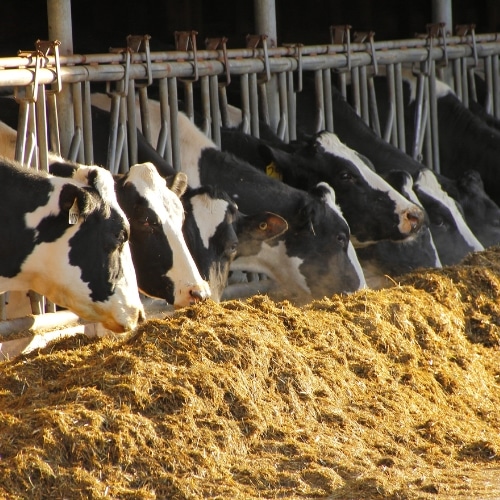
Betaine helps reduce oxidative stress in animals by protecting cells against osmotic pressure, heat, and metabolic overload. As a compatible osmolyte, betaine stabilizes proteins and cell membranes, allowing cells to spend less energy on repair while sustaining less damage from free radicals. In this article, we answer the most frequently asked questions about betaine, oxidative stress, and its practical application in livestock farming.
What is oxidative stress and how does it develop in animals?
Oxidative stress in animals occurs when there is an imbalance between the production of reactive oxygen species (free radicals) and the body’s ability to neutralize them. This imbalance damages cell membranes, proteins, and DNA, and disrupts normal cellular processes. Animals are most vulnerable during heat waves, weaning periods, rapid growth phases, and infections.
Free radicals are a normal byproduct of energy metabolism. As long as the body has sufficient antioxidant capacity, they are quickly neutralized. However, during chronic heat stress, a low-protein diet, coccidiosis, or high production pressure, this system becomes overwhelmed. The consequences are noticeable: reduced feed intake, poorer growth, higher mortality, and a weakened immune system.
In livestock farming, broilers, weaned piglets, and highly productive sows are particularly susceptible to oxidative cell stress. In poultry, heat stress leads to an increased respiratory rate and a disrupted electrolyte balance, placing additional strain on the oxidative system. In pigs, weaning stress plays a comparable role: the combination of dietary change, social stress, and an immature immune system makes the intestinal wall vulnerable to oxidative damage.
How does betaine protect cells against oxidative damage?
Betaine protects cells against oxidative damage through two complementary mechanisms: as a compatible osmolyte, it stabilizes proteins and cell membranes under stress, and as a methyl donor, it supports the production of antioxidant compounds such as carnitine and glutathione. This reduces the energy demand for cell maintenance and increases cellular resilience.
As an osmolyte, betaine moves from extracellular fluid into the cytosol when a cell experiences osmotic stress. There, it attracts water molecules, stabilizes protein structures, and prevents denaturation. This is comparable to a hydration shell that surrounds and protects sensitive molecules. Because betaine maintains the water balance within cells, the cell needs to invest less energy in active ion transport via pump proteins. Active ion transport requires ATP, and that energy can now be used for growth and repair rather than cell stabilization.
Through its methyl donor function, betaine supports the transmethylation cycle. In this cycle, betaine remethylates homocysteine to methionine, which is then converted to S-adenosylmethionine (SAM). SAM is the universal methyl donor for hundreds of reactions in the body, including the synthesis of carnitine. Carnitine transports long-chain fatty acids into the mitochondria for combustion, resulting in less fat deposition and better energy utilization. This indirectly reduces the metabolic overload that causes oxidative stress.
In addition, betaine protects the intestinal wall, which is one of the first barriers against oxidative damage. It increases villus height, reduces crypt depth, and maintains tight junction function. A healthy intestinal barrier prevents bacterial toxins from entering the body and triggering a systemic inflammatory response that amplifies oxidative stress.
In which animal species and circumstances does betaine work best?
Betaine works best in animals exposed to heat stress, osmotic pressure, weaning stress, or a diet with marginal methionine and choline levels. The positive effects are most strongly documented in broilers, weaned piglets, finishing pigs, and highly productive sows, but relevant benefits are also reported in laying hens and ruminants.
In weaned piglets, betaine protects enterocytes during the post-weaning dip, maintains tight junction function, and reduces intestinal permeability. This translates into a lower incidence of diarrhea, better fecal consistency, and a faster recovery from the growth dip following weaning.
In finishing pigs, the effects are strongest in fast-growing genotypes with high muscle deposition, in animals under heat stress, and in diets with marginal methionine levels. In these circumstances, betaine stimulates carnitine synthesis, enabling more fatty acids to be burned and increasing energy availability for protein deposition.
In sows, betaine is most effective during periods of heat stress, in late gestation and early lactation, and in hyperprolific animals. Expected results include higher birth weights, better colostrum production, and less body condition loss in the sow.
In broilers, multiple independent trials confirm that betaine improves performance, particularly under heat stress and in wheat-soy diets with marginal choline levels. The optimal dosage is typically around 420 ppm betaine per kg of feed.
What are the measurable effects of betaine on animal health?
The measurable effects of betaine on animal health include improved technical performance, better carcass quality, lower mortality, and a healthier intestinal wall. These effects are the direct result of reduced oxidative cell stress, better osmoregulation, and more efficient energy metabolism.
In practice, the following results are consistently reported:
- Better growth and feed conversion: higher average daily gain (ADG) and improved FCR, particularly in broilers and finishing pigs
- Improved carcass composition: higher lean meat percentage, reduced fat deposition, and lower drip loss in finishing pigs and poultry
- Stronger intestinal integrity: greater villus height, lower crypt depth, better nutrient utilization, and a more stable microbiome balance
- Lower incidence of diarrhea in weaned piglets: through stabilization of the osmotic balance in the gut and reduced water loss in the lumen
- Better heat tolerance: animals maintain feed intake and performance more effectively at high ambient temperatures
- Improved reproductive performance in sows: more live-born piglets, higher weaning weights, and better colostrum quality
These effects are strongest when betaine is used in animals that are genuinely under stress or receiving a diet that is marginal in methionine or choline. In animals without stress factors and with fully covered nutritional requirements, the effects are smaller but still measurable in terms of gut health and carcass quality.
Does natural betaine differ from synthetic betaine in effectiveness?
Yes, natural betaine and synthetic betaine HCl differ significantly in effectiveness and safety. Natural betaine, obtained as a byproduct of sugar beet processing, performs better in terms of intestinal barrier function, heat stress resistance, and carcass quality. Betaine HCl also contains trimethylamine (TMA) as a byproduct, which creates a risk of fishy odor and flavor in animal products.
Some specific disadvantages of synthetic betaine HCl compared to natural betaine:
- Higher TMA levels (200 to 6,000 ppm) with a risk of fishy egg flavor in poultry
- Disrupted electrolyte balance due to elevated dietary chloride levels
- Lower water solubility (by a factor of 3) and slower dissolution rate (by a factor of 2)
- Weaker tight junctions in the TEER model, indicating a less effective intestinal barrier function
- Inferior performance under heat stress compared to natural betaine, confirmed in broiler studies
Large-scale research at Schothorst Feed Research in the Netherlands confirms that natural betaine restores nutrient digestibility more effectively than betaine HCl in a coccidiosis challenge model. In addition, natural betaine has a lower CO2 footprint, which aligns with the sustainability goals of modern livestock operations.
How is betaine practically applied in animal feed?
In practice, betaine is used as a feed additive in dry premixes or as a liquid supplement added to drinking water. The recommended dosage varies by animal species and objective, but typically ranges between 1,000 and 2,000 mg of betaine per kg of feed for the most pronounced effects on osmoregulation and cell stress protection.
An important practical advantage is that natural betaine is heat-stable up to 200 degrees Celsius. It can therefore be added at any stage of the mixing, conditioning, and pelleting process without any loss of quality. This makes it particularly suitable for use in pelleted feed and high-temperature processing.
Unlike choline chloride, betaine is non-hygroscopic and chemically inert in premixes. Choline chloride absorbs moisture, causes clumping, and destroys vitamins A, D3, K3, B1, B2, and B12 in premixes. Betaine has none of these drawbacks, thereby extending the shelf life of premixes. For drinking water applications, Jodoplume is a liquid combination of betaine, organic acids, and copper sulfate that can be easily dosed through the drinking water system, particularly during heat stress or coccidiosis challenges.
For compound feed manufacturers and distributors looking for more information about betaine in animal nutrition, Jodoco provides comprehensive technical documentation and formulation support.
How Jodobet helps address oxidative stress in animals
We develop and produce Jodobet, our core product based on natural betaine derived from non-GMO sugar beets. Jodobet is available in a dry (D96) and liquid (L35) form and offers a direct, scientifically substantiated solution for oxidative cell stress in animals. Its mode of action is broad and measurable:
- Osmoregulation: protects cells against heat stress, dehydration, and osmotic overload
- Methyl donation: supports carnitine synthesis, fat oxidation, and efficient energy metabolism
- Gut health: maintains tight junctions, increases villus height, and promotes eubiosis
- Carcass quality: higher lean meat percentage and reduced drip loss
- Safety in premixes: no vitamin degradation, no hygroscopic behavior, long shelf life
Jodobet fits into any feed program for poultry, pigs, and ruminants, and can be used as a direct replacement for or supplement to choline chloride. Want to know which dosage and application best suits your situation or product portfolio? Contact us and we will be happy to work with you on a tailored solution.