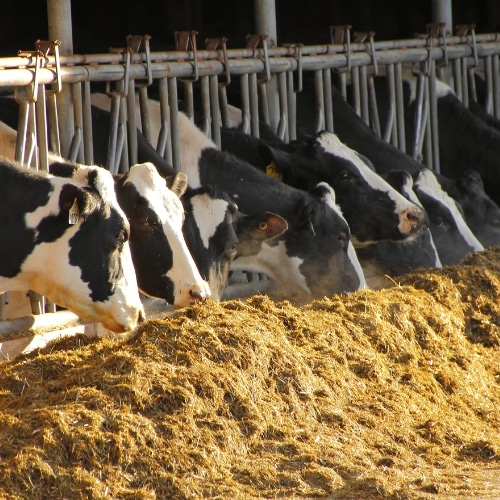
Good gut health in cows directly determines how much feed an animal consumes and how efficiently that feed is utilized. When the intestinal wall is intact, the gut flora is in balance, and digestion runs smoothly, a cow takes in more feed and extracts more energy and nutrients from her ration. In this article, we answer the most frequently asked questions about gut health, feed intake, and the factors that play a role in dairy cattle and cattle in general.
How does gut health affect feed intake in cows?
Gut health in cows affects feed intake in two ways: a damaged or inflamed intestinal wall reduces the absorption capacity of nutrients, while a disrupted gut flora disturbs the fermentation process in the rumen and intestines. The result is that cows eat less, digest more slowly, and ultimately produce less milk or grow less efficiently.
In ruminants, the intestine is not a passive transit channel. Villus height and crypt depth determine the available absorption surface. A healthy intestinal wall with tall villi absorbs nutrients quickly and efficiently. When intestinal integrity decreases — for example due to inflammation or a disrupted microbiome — the villi shrink and absorption declines. This translates directly into lower feed intake and poorer technical performance.
Moreover, gut health plays a role in the taste perception and eating behavior of the cow. Animals suffering from abdominal pain, gas formation, or diarrhea eat less and more selectively. Rumen motility in cows slows down, transit time increases, and the animal enters a negative energy balance. In dairy cattle, this is particularly critical around calving, when energy requirements are at their highest.
Which factors disrupt gut health in dairy cattle?
Gut health in dairy cattle is disrupted by a combination of nutritional factors, environmental stress, and pathogens. The most common causes are an abrupt ration change, heat stress, a lack of structural fiber, an excessive presence of gram-negative bacteria, and a negative energy balance around calving.
A sudden transition from a dry cow ration to a production ration is a classic trigger. The rumen and intestinal tract need time to adapt to a higher proportion of concentrate feed. If that transition happens too quickly, rumen acidosis, dysbiosis in the gut flora, and increased intestinal wall permeability — also known as “leaky gut” — can occur.
Heat stress is a second important factor. At high temperatures, blood flow to the intestines decreases in favor of the periphery, which weakens intestinal integrity. At the same time, feed intake drops while energy requirements remain high. This creates a vicious cycle that is difficult to break without targeted support.
Other disruptive factors include:
- A lack of structural fiber, leading to reduced rumen motility
- Mycotoxins in roughage or by-products that damage the intestinal wall
- Excessive antibiotic use that disrupts the microbiome balance
- Wet or spoiled feed that attracts pathogens
- Stress caused by overcrowding, social hierarchy, or weather conditions
What is the role of gut flora in the digestion of roughage?
Gut flora in dairy cattle is essential for the digestion of roughage. Micro-organisms in the rumen and gastrointestinal tract break down cellulose, hemicellulose, and starch into volatile fatty acids that the cow uses as an energy source. Without a diverse, balanced microbiota, a cow cannot efficiently utilize roughage, regardless of its quality.
In the rumen, bacteria, fungi, and protozoa work together to ferment fiber-rich plant materials. The main end products are acetic acid, propionic acid, and butyric acid. Acetic acid serves as an energy source for milk fat production, propionic acid is a glucose precursor, and butyric acid feeds the rumen wall cells. A disruption of this balance — through dysbiosis — reduces the production of these valuable fatty acids.
Butyrate, the salt of butyric acid, also plays a direct role in intestinal integrity. It strengthens the tight junctions between intestinal cells and reduces inflammatory responses in the intestinal wall. A microbiome that produces sufficient butyrate thus contributes to both better digestion and a stronger intestinal barrier. The relationship between gut flora and digestion in cattle is therefore bidirectional: a healthy microbiota protects the gut, and a healthy gut in turn supports a stable microbiota.
How do you recognize signs of poor gut health in cows?
Poor gut health in cows can be recognized by changes in manure consistency, eating behavior, milk production, and overall condition. The most reliable early signs are watery or foamy manure, a drop in feed intake without an obvious feed-related cause, and reduced rumination activity.
Manure is a direct reflection of what is happening in the gastrointestinal tract. Healthy cows produce manure with a firm but smooth consistency. Watery manure indicates an excessively fast transit time or disrupted fermentation. Foamy manure can indicate rumen acidosis or an excessive presence of gas-producing bacteria.
Other recognizable signs include:
- Reduced feed intake: the cow spends less time at the feed fence or selects more strongly within the ration
- Less rumination: a healthy cow ruminates six to eight hours per day; less than that indicates reduced rumen function
- Weight loss or body condition decline: visible in the BCS score, particularly around the spine and hindquarters
- Drop in milk production: a sudden decline without a feed change is a classic signal
- Elevated somatic cell counts: an indirect indicator of a weakened immune system, partly driven by the gut
Early intervention at these signs prevents a temporary problem from developing into a chronic condition with lasting production losses.
Which natural ingredients support healthy gut function in cattle?
Natural ingredients that support gut function in cattle include betaine, organic acids, butyrate, medium-chain fatty acids, and essential oils. Each of these substances works through a specific mechanism and strengthens gut health in a different way, without damaging the gut flora as antibiotics can.
Betaine is an osmolyte that protects cells against stress by regulating cell volume and hydration status. In the gut, betaine increases villus height and reduces crypt depth, leading to a larger absorption surface. At the same time, betaine as a methyl donor promotes cell renewal and supports a healthy microbiome balance. For cows, betaine is particularly valuable around calving and during periods of heat stress. More background on how betaine works can be found on our website.
Organic acids lower the pH in the front section of the gastrointestinal tract, which inhibits the growth of gram-negative pathogens such as E. coli and Salmonella. They also serve as an energy source for intestinal cells and improve the digestibility of feed.
Butyrate directly feeds the intestinal wall cells and strengthens the tight junctions that keep the intestinal barrier intact. It reduces inflammation and promotes the regeneration of intestinal tissue. Medium-chain fatty acids (MCFA), such as capric acid and lauric acid, have a strong antimicrobial effect and help combat pathogens without disrupting the beneficial flora.
Essential oils such as oregano and garlic support gut health through their antimicrobial and anti-inflammatory properties. They are particularly effective as a complement to organic acids in an integrated approach.
When is it worthwhile to use gut health products in cows?
Using gut health products in cows is most worthwhile during periods of increased stress or increased risk of dysbiosis. The three most important moments are the transition period around calving, periods of heat stress, and situations in which the ration changes significantly or feed quality declines.
Around calving, a cow’s gut is under maximum pressure. The negative energy balance, the hormonal changes, and the transition to a production ration make the gut flora vulnerable. Preventive support in the three weeks before and after calving can help prevent ketosis, rumen acidosis, and reduced feed intake.
During heat stress, feed intake drops while energy requirements remain high. Gut health products help maintain intestinal integrity and keep absorption efficiency at an adequate level, even when the animal is eating less. This reduces the risk of production losses and body condition decline.
A ration change — for example during the transition from grass to silage or when the concentrate composition changes — is a third critical moment. The microbiota needs time to adapt, and targeted support can make that transition run more smoothly. View our range of animal feed additives for an overview of the available solutions.
How Jodoco helps with gut health in cows
At Jodoco, we have been developing scientifically substantiated products based on natural betaine, organic acids, butyrate, and essential oils for more than 25 years, specifically focused on gut health and feed intake in cows and other cattle. Our products are not quick fixes, but structural support for healthier gut function and better technical performance.
Specific products we use for gut health in cattle:
- Acibet.G: a liquid combination of betaine, glycerol, and organic acids that improves feed intake, supports liver function, and reduces the negative energy balance. Trial results show that cows receiving Acibet.G maintain their milk production with 25% less concentrate per 100 kg of milk.
- Acibet.TMR: prevents heating of TMR rations, keeps feed palatable for longer, and improves feed intake by preserving nutritional value.
- Glycoboost: an energy booster with betaine and rapidly available carbohydrates that preventively addresses ketosis and fatty liver, with proven results that outperform classic monopropylene glycol.
- Grovax: a combination of organic acids, butyrate, MCFA, and essential oils that strengthens intestinal integrity, combats pathogens, and fits within an antibiotic-free strategy.
Want to know which product best suits your situation? Contact us for personalized advice tailored to your needs.